
toys-accessories
How difficult should a dog's first puzzle toy be?
Choose a starting puzzle challenge by observing success, interest and frustration rather than buying the highest difficulty label.
Published 29 November 2026
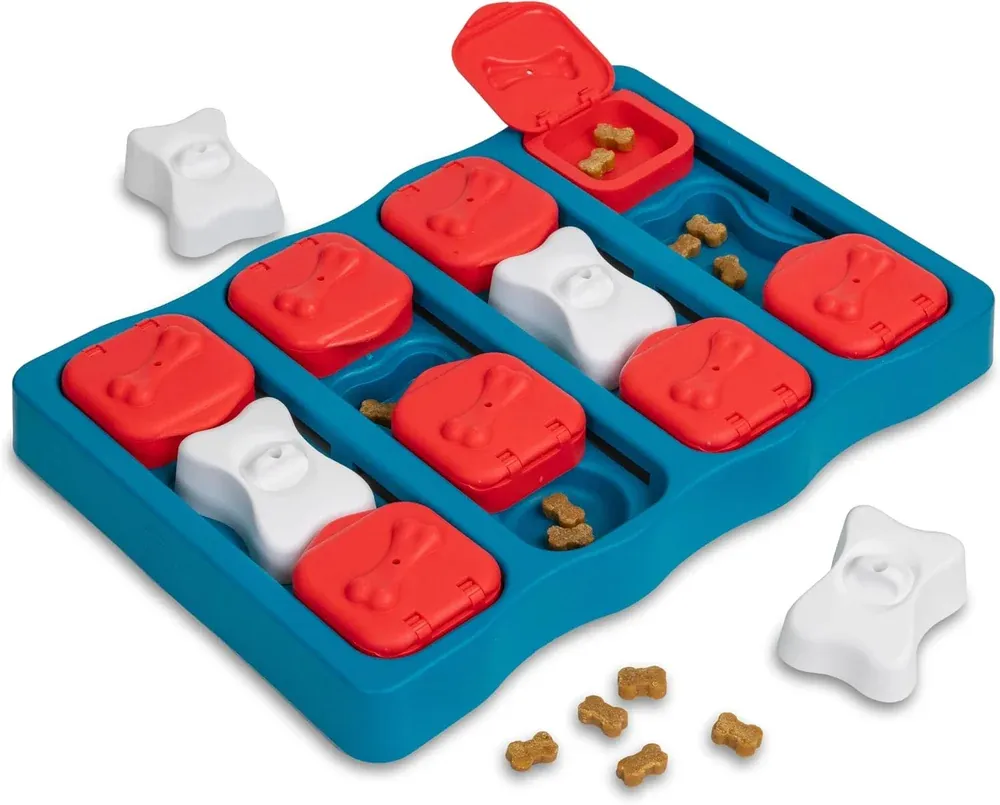
Choose a starting puzzle challenge by observing success, interest and frustration rather than buying the highest difficulty label. This guide focuses on the practical decision behind the purchase, using FetchBoy’s recorded product information. It is an editorial buying guide, not a hands-on product test.
A difficulty label is only a starting point
A board puzzle and a textured feeding mat ask for different actions. Previous experience, confidence and motivation influence how a dog approaches them. Choose an activity that offers an obvious first success instead of treating a higher level as a better purchase.
Show where the reward is
Set up the simplest permitted version of the puzzle and allow the dog to discover it. Avoid repeatedly moving the equipment while the dog is trying to understand it. A mat can provide a less mechanically complex alternative, but it must still be used as intended and supervised.
Change one thing at a time
Once the dog understands the task, make one small change rather than increasing every obstacle at once. Watch for disengagement or attempts to dismantle the equipment. More difficult is not always more enjoyable. The aim is an activity the dog can participate in, not a test it must pass.
Buy for the next useful step
If a simple activity remains engaging, there may be no reason to replace it. Consider reset time, cleaning and storage before adding another puzzle. Inspect all parts and follow age, size and use guidance for the exact product. A short successful session is preferable to an expensive toy that creates repeated frustration.
Related reading
Sources
Ad · We may earn a commission from these links, at no extra cost to you. Product types and features are buying guidance; check the retailer’s listing for details.