
dogs
Choosing a Dog Walking Harness: Evidence-Based UK Buying Checks
Get UK charity-backed guidance on fit, harness types and safe selection choices for your dog's next walking harness.
Published 15 November 2026
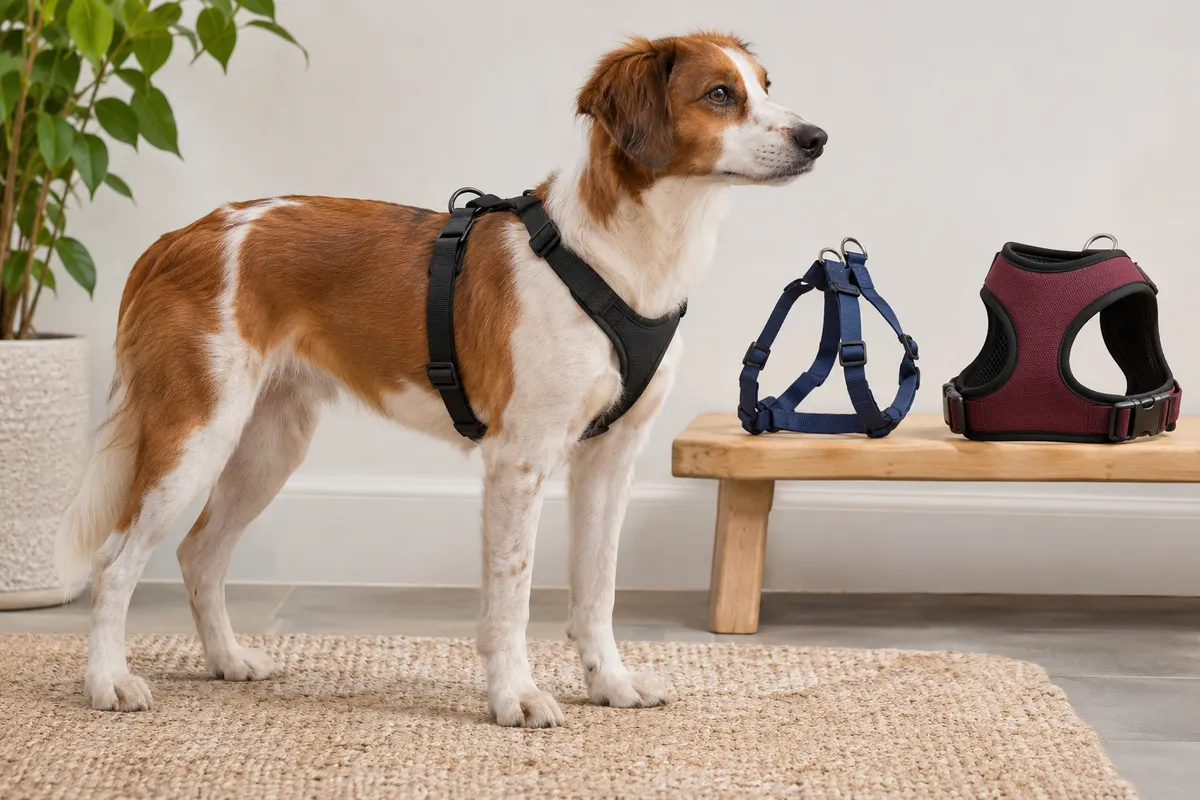
Research-based buying guide; FetchBoy has not hands-on tested these harnesses. Selecting a walking harness for your dog involves more than picking a colour or style; UK animal charities urge a careful focus on fit, type, and practical design. Their guidance highlights the importance of a harness that stays secure yet does not restrict movement or cause discomfort. This means ensuring space for your fingers beneath the straps, confirming the harness doesn’t shift or risk a slip, and favouring designs that don't impede movement at the shoulders or legs. Additional choices—like step-in versus overhead designs, neck-fastening alternatives, and modular or three-strap harnesses for difficult fits—should all be evaluated through the lens of your dog's comfort and behaviour. When specific features are only described by the manufacturer, treat these as product details rather than independent assurances of fit or safety. The following guide details what is directly supported by UK charity advice and leading product descriptions, while offering neutral, practical questions to help you compare your options.
1. Accurate Fitting: Chest, Neck & Stomach Measurements
UK animal charities consistently identify a secure, balanced fit as the foundation for choosing any dog harness. According to Bath Cats and Dogs Home, following a harness brand’s sizing chart is necessary, and measurements typically reference the dog’s widest chest, thickest neck, and sometimes the stomach. Both Dogs Trust and the Edinburgh Dog and Cat Home emphasise that a harness should provide just enough room for a comfortable finger space beneath each strap—but with no excess slack that lets your dog wriggle out. Rather than relying on visual guesses, aim to use the actual body measurements requested by the brand. Certain brands may specify further body parts for measurement, so confirm with seller documentation or brand resources if in doubt. This criterion—secure but comfortable fit—remains constant regardless of colour, style, or extra features.
2. Step-In Versus Over-the-Head: Understanding Fitting Styles
The way a harness is put on can influence your dog’s comfort and willingness during walks. Bath Cats and Dogs Home and other UK charities distinguish between step-in and over-the-head designs. In a step-in harness, the dog’s legs pass through designated openings before the harness is fastened around their body. Over-the-head harnesses are slipped on from above and then secured behind the front legs. According to charity advice, if your dog dislikes having their paws handled, an over-the-head option may be more suitable. Conversely, for dogs who are anxious about things passing over their head, seek a design that either fastens solely around the neck and chest or is modular—avoiding overhead movement altogether. For adult dogs or puppies with particular sensitivities, the application method deserves special consideration to reduce any stress at fitting time.
3. Neck-Fastening and Alternative Closures
Options exist beyond the two main harness fitting styles. Dogs who dislike objects going over their heads can benefit from harnesses that fasten independently around the neck and chest. According to Edinburgh Dog and Cat Home, this neck-fastening style is specifically suggested for wary or nervous dogs. Decide what makes your dog most comfortable: some harnesses require an overhead slip, while others open fully to close around the neck or even use side buckles. Review the fastening location in each product’s description and seek out brands that offer alternatives suitable for your dog’s temperament and handling preferences. If you notice your dog resists a certain type of handling, matching the closure method to their specific needs can help make daily harnessing less troublesome for both pet and owner.
4. Ensuring Freedom of Shoulders and Legs
Leaving your dog’s shoulders and front legs free is highlighted by both Dogs Trust and the Edinburgh Dog and Cat Home as a top priority. Harnesses should not run across the shoulder joint or impede the natural stride of your dog. Padding, adjustability, and harness design should combine to keep straps clear of the primary movement points at the front. This is crucial for athletic or active dogs, but the same principle supports the wellbeing of all sizes and energy levels. When reviewing product images or sample harnesses, note whether any segment sits over the shoulder or rubs against the leg. Padding and soft materials may help comfort, but the underlying strap placement is the most important. Always confirm the fit leaves these areas unobstructed before purchase.
5. Lead Attachments: Chest, Back, or Both
Harnesses may provide lead attachment points at the chest, back (shoulder-blade area), or both. Edinburgh Dog and Cat Home points out that front and back attachments offer a choice of walking position and handling. No arrangement is universally better; instead, consider your walking style and your dog’s habits. Some dogs respond differently to front or back lead positions, and some owners may favour one or the other for handling or training. If comparing products, check for listed attachment ring locations in both the manufacturer’s details and user imagery to confirm the design fits your planned use. Whichever arrangement you choose, it should not compromise the secure, measured fit supported by charity advice.
6. Three-Point and Modular Harnesses: Options for Difficult Fits
Charity advice highlights three-point harnesses and modular products as options for certain fit challenges. For dogs who tend to back out of standard harnesses, Bath Cats and Dogs Home and Edinburgh Dog and Cat Home reference three-strap harnesses—which secure through the neck, behind the front legs, and further back along the body—as worth considering. Modular harnesses, often sold in customisable separate parts, can offer a better fit for dogs with unusual proportions or body shapes. Neither variant can absolutely prevent escapes, but they add options for owners facing persistent slipping out of traditional harnesses. These choices can be discussed with retailers or fitters when your dog’s body shape or behaviour suggests extra measures may be helpful for a more tailored fit.
7. Manufacturer Features: Ruffwear Front Range
The Ruffwear Front Range harness, according to Ruffwear’s own UK site, details certain design characteristics. The manufacturer lists features such as foam padding for comfort, four body adjustment points, an aluminium back V-ring for leash attachment, reinforced webbing at the chest for a second lead point, an ID pocket for tags, reflective trim for visibility, and a loop for attaching an optional light (not included). Buyers should note these are manufacturer-provided design features, not independently tested for comfort or fit. When evaluating the Front Range, check you are purchasing the current official version, and use independent UK charity sizing/fit guides to assess suitability for your own dog.
8. Manufacturer Features: Rabbitgoo Classic Fit
Rabbitgoo’s Classic No-Pull Dog Harness, based on the current product listing, includes both front and back lead attachment rings, four adjustment points, two side quick-release buckles, a back handle, and reflective strips. These design elements are manufacturer-specified and not independent evidence of fit or safety. Use these details to compare with UK charity guidance: focus on how the adjustment points could help achieve a secure fit, and whether the shoulder and leg areas remain free, as recommended by charities. Before purchasing, ensure the selected version matches the manufacturer’s current specification and is suitable for the sizing needs of your dog.
9. Fitting and Care for Julius-K9 Models
According to Julius-K9’s UK product FAQ, correct positioning is essential: the front strap should rest on your dog’s chest, not drop towards the legs or rise near the neck. They also specify that you should be able to slip fingers between the harness and the dog’s back, mirroring charity advice about finger spacing for both security and comfort. The company recommends hand-washing, not machine washing, highlighting brand-specific care. Importantly, Julius-K9 notes that different Powerharness models are not interchangeable, so use model-specific guides for fitting and maintenance rather than assuming all versions work the same way.
Related reading
Questions & answers
How tightly should a dog harness fit?
A harness should be snug enough to prevent slipping, but allow a comfortable finger space beneath the straps, as per UK charity advice.
Can standard walking harnesses be used in a car?
Standard walking harnesses are not designed as car restraints. Use only harnesses labelled and marketed for travel safety in vehicles.
Sources
Ad · We may earn a commission from these links, at no extra cost to you. Product types and features are buying guidance; check the retailer’s listing for details.