
cats
Automatic vs microchip pet feeders: choosing for your household
Compare automatic and microchip feeders for cats. Explore scheduled vs individual access, food types, spaces, and setup.
Published 4 November 2026
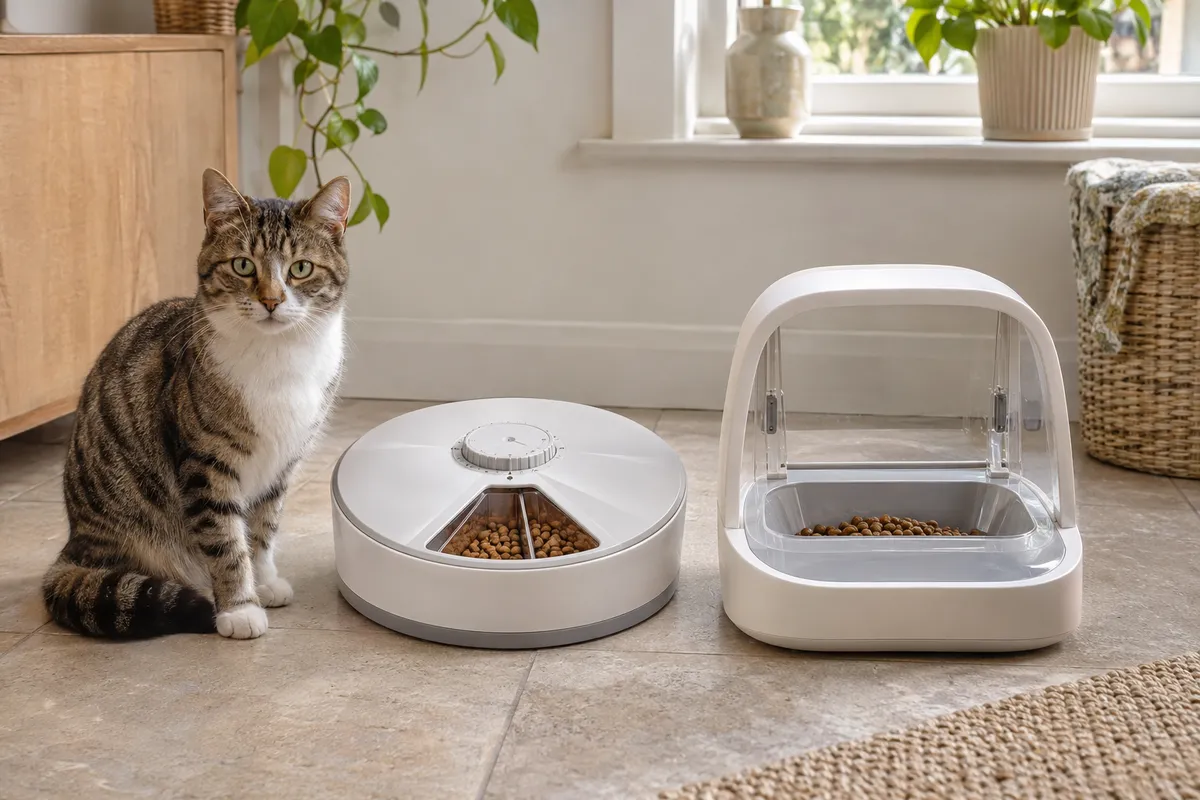
When choosing between automatic and microchip pet feeders, evaluating how each manages food access can help match the system to your pet and household needs. Automatic feeders operate on set schedules, while microchip feeders control which animal gets access. Understanding the differences in dispensing style, supported food types, and household setup options—in particular for homes with multiple pets—enables you to plan feeding routines, prevent food competition, and organise feeding stations more effectively. With the right approach, you can select feeding solutions that fit your space, routines, and individual animal diets.
How automatic feeders schedule meal times
Automatic pet feeders dispense pre-set portions of food at scheduled times, providing a consistent routine for pets. They are typically designed to deliver dry food, and some may hold wet foods depending on the product, but it is essential to check manufacturer details before relying on this function. In households with multiple pets, automatic feeders do not distinguish which animal eats, meaning any pet can access the food after it is dispensed. For owners managing mealtimes for several animals, using multiple feeders in separate locations may help reduce competition or sharing. If you are considering automatic feeders, think about whether your pets eat similar diets and stick to the same schedule, and if your home has enough distinct spaces for the devices to be placed apart.
Individual food access with microchip feeders
Microchip pet feeders are intended to open only for one specific pet, typically identified by their microchip or a dedicated tag. This ensures only the assigned animal can access the food inside, allowing you to enforce dietary boundaries in multi-pet households or when pets have differing nutritional needs. Animal welfare guidance highlights that these feeders are especially beneficial in multi-cat households to help manage which cat is eating which food and to lower competition around mealtimes. Some models may support both wet and dry food, but it is important to confirm with the manufacturer. Using microchip feeders requires you to think about which animals need special access and to plan locations that allow pets to eat comfortably without being disturbed by others.
Food compatibility: checking what each feeder model can serve
Product capability for wet or dry food varies. Before purchase, always verify from the manufacturer’s documentation whether a feeder is suitable for your preferred food type. Not all automatic or microchip feeders are equipped for wet food, and some may only support dry kibble. If you anticipate dietary changes or a combination of wet and dry feeding, verify that your shortlisted model can accommodate your requirements. Comparing guidance for each product side-by-side and creating a list of intended uses—like regular dry feeding, occasional wet meals, or restricted-access diets—can help clarify your selection. Keeping a checklist of your main requirements (such as food type and feeding schedule) prepares you for visits to retailers or product research online.
The importance of separate feeding spaces in multi-pet homes
Animal welfare sources emphasise that providing separate feeding spaces for each cat is valuable in reducing food competition in multi-cat households. Consider mapping out rooms or quiet corners where feeders might be placed so each animal can eat undisturbed. These dedicated spaces can be bedrooms, utility rooms, or other private areas less frequented by people and pets. When assessing space, ask yourself if doorways, furniture, or other pets will interfere with access to the feeder. Engage household members in testing a few locations, such as a laundry area or an unused alcove, to see which setup feels calmest at mealtimes. Adjust as needed to maximise both animal comfort and ease of cleaning.
Organising feeding stations: household planning options
Establishing feeding routines involves practical planning. One way to begin is to list the animals in your household and note which require special diets or otherwise need their meals separately managed. Think about daily routines: who is usually home to refill or check the feeder, which rooms remain quiet during peak pet activity, and where pets naturally go for privacy. If you are using more than one feeder, lay out a simple diagram of your home and mark potential feeding spots. This can reveal whether you need to rearrange furniture or obtain extra feeding mats to keep areas clean. For flats or shared spaces, consider staggering mealtimes or negotiating locations that won’t overlap with other house activities.
Practical questions to guide feeder and location choices
Consider these options as you compare feeder styles and placement: - Which pets in your home have special diet requirements? - Can multiple feeders be safely set up in different rooms? - Will feeders be left out all day or used for set meal times only? - Is there storage nearby for food and cleaning supplies? - Who will be responsible for maintaining each feeder? - Are there areas of the home where feeders might get bumped, tipped, or accessed by unintended pets? These questions can help clarify what features are desirable for your household and avoid surprises after purchase and setup.
Making space and checking inventory before setting up feeders
Before bringing in any new feeding device, make an inventory of what you have—bowls, mats, and preferred feeding spots for each pet. Measure countertop or floor space in intended areas, noting any obstructions such as doors or high-traffic walkways. In shared or rental housing, think through how additional feeders will fit with communal activities. If your pets like quiet and privacy, try setting up a trial feeder spot in an out-of-the-way nook or behind a baby gate (if appropriate for your household). Discuss rearrangement possibilities with family or flatmates to avoid crowding or blocking paths.
Involving household members in feeding routines
If more than one person takes part in pet care, collaborating on feeding arrangements can ensure coverage and accountability. Assign specific responsibilities, such as refilling at set times or rotating cleaning duties, and post an easy-to-follow checklist near the feeder area. Gather input on which spaces feel most accessible and least disruptive for both pets and humans, and trial different arrangements if needed. If children help feed pets, they could take ownership of selecting attractive and practical feeder locations (with supervision). Flexibility for changing routines as pet needs shift, or as household schedules evolve, can help make feeding time easier for everyone.
Related reading
Questions & answers
Can microchip pet feeders be used for both wet and dry food?
Some microchip feeders may be compatible with wet or dry food, but always check the specific product manufacturer's guidance for supported food types.
How can I prevent pets from eating each other's food?
Animal care sources recommend offering separate feeding places or using microchip feeders with access restricted to individual pets to reduce food competition.
Should I use multiple feeders in a multi-pet household?
Animal welfare charities note that providing separate feeding stations can help minimise competition between pets in a shared home.
Where should I place pet feeders in my home?
Place feeders in locations that are quiet, easy for pets to access, and convenient to keep clean. You can test different spots to find what works in your space.
Sources
Ad · We may earn a commission from these links, at no extra cost to you. Product types and features are buying guidance; check the retailer’s listing for details.